Is it fair to call a Viking game “inaccurate” if it’s clearly stylised?
A Viking game can put a longship beneath an enormous sunset, give every warrior a fur-lined cloak and let the hero cleave through a dozen foes before breakfast. It can also be historically inaccurate. The more interesting question is whether “inaccurate” is the most useful word for the job.
Games are not museum displays, and most are not trying to be history lessons. They have to communicate a world quickly, make it fun to explore and give players recognisable visual clues. That means a stylised Viking settlement may borrow from different periods, exaggerate familiar details or invent a look that never existed in quite that form. The choice is not simply between perfect reconstruction and careless nonsense. There is a broad and often creative space between the two.
So how should we judge accuracy? It helps to ask what a game is trying to do, what its visual language tells us, and whether its inventions obscure or enrich the history behind them. That distinction matters whether you’re playing a sprawling historical adventure, reading a feature from HistoryMedieval, or chatting about a new release with friends who send you a message mid-game: “Did Vikings really do that?”
Games have a different clock from films
A film can spend time establishing its setting. It might open on the creak of a ship, the sound of tools in a workshop, or a close-up of a carefully made brooch. A game often needs to say more, faster. Before the player has read a single note or spoken to a character, the environment needs to signal: this is the Viking world.
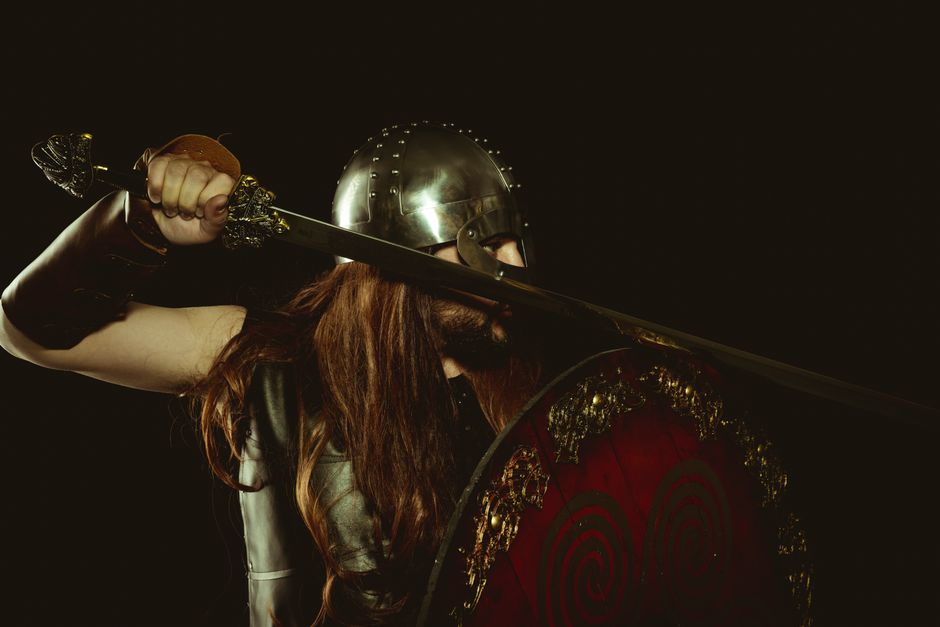
That is where familiar visual shorthand earns its keep. A longship on the shoreline, round shields lined along a wall, timber buildings, smoky hearths and a settlement clustered around a harbour can establish a place in seconds. These objects are not necessarily inaccurate simply because they are instantly recognisable. Ships and shields were part of Viking Age life; the question is how they are used, and whether the game treats them as more than decorative symbols.
For example, a ship might be a working vehicle for travel, trade or raiding, or it might exist only as a dramatic backdrop. Shields could suggest practical equipment, but a perfectly uniform wall of bright, identical shields might create a more cinematic impression than an everyday one. A settlement can feel convincing through the way its houses, workshops, animals and landing places relate to each other, even if no single building is a precise reconstruction.
Film-makers also use shorthand, of course. But games repeat images. Players may spend hours in one settlement, return to it in different seasons, and inspect its details more closely than a film audience can. That creates an opportunity: games can use an immediately legible visual vocabulary, then add nuance through play. A ship can first read as “Viking”; later, the player can learn what it carries, who maintains it and why the route matters.
Stylised vs realistic: what is the game promising?
The phrase stylised vs realistic is not a simple scorecard. A stylised game can be thoughtful about history, while a realistic-looking game can still mix periods or misunderstand how people lived. A rough, hand-painted landscape may be less visually naturalistic than a painstakingly rendered one, yet communicate a stronger sense of place.
It helps to separate a game’s artistic style from its historical claims. A game might use exaggerated colours, heroic proportions or dramatic lighting while still drawing its clothing, architecture and objects from research. Another might aim for photorealism but fill its world with familiar fantasy conventions. Appearance alone does not tell us how carefully the setting has been considered.
There is also a difference between a deliberate invention and an accidental impression. A game may clearly signal that it is reimagining the past. That gives players permission to enjoy the world on its own terms. But if it presents itself as an authentic reconstruction, or borrows the authority of history while repeating a myth, it is fair to ask more of it.
Ask what the style is doing
When considering how to judge accuracy, try asking a few practical questions:
- What kind of experience is it offering? Is it fantasy inspired by Viking culture, historical fiction, or a reconstruction?
- Are its choices consistent? A stylised world can feel coherent even when it departs from evidence; a jumble of mismatched details may feel less convincing.
- Does the game invite curiosity? Does it offer context for its objects and people, or use history only as a costume?
- Could a player mistake an invention for a fact? The more confidently a game presents a detail as authentic, the more care it should take with that detail.
None of these questions demands that every game become a classroom. They simply help us distinguish between a creative choice and a misleading one. A game can be entertainment first and still treat its historical inspiration with care.
The horned helmet: a myth with excellent marketing
No Viking visual shorthand is more famous—or more misleading—than the horned helmet. It appears in cartoons, costume shops, sports branding and plenty of games because it is instantly readable. Put horns on a helmet and the audience knows what you mean, even if the image tells us more about later popular culture than about Viking Age battle gear.
There is no good evidence that horned helmets were standard Viking combat equipment. The enduring image owes much to later artistic and theatrical traditions, including nineteenth-century costume design and stage productions that wanted a bold, dramatic “Norse” look. Horns turn a helmet into a strong silhouette. They also make a character more recognisable from a distance, which is handy on a stage, a poster or a game screen.
That helps explain why the myth persists. It is memorable, visually useful and endlessly repeated. Once an image becomes shorthand, each new version seems to confirm the last. A player may have seen horned helmets in films, children’s books and illustrations long before encountering a source that challenges them. Repetition feels like evidence, even when it is really just repetition.
Does that mean a game should never use one? Not necessarily. In a comic fantasy, a horned helmet may be an intentional design flourish rather than a claim about historical equipment. The issue is context. If the game’s tone is playful or openly fantastical, the horns can be part of its visual language. If it presents itself as a grounded account of Viking life, the same choice deserves scrutiny—or at least an explanation.
Gjermundbu: a reality check in metal
When the horned-helmet question comes up, the Gjermundbu helmet offers a useful reality check. Found in a burial at Gjermundbu in Norway, the helmet dates to the tenth century and is often described as the only near-complete Viking Age helmet discovered so far. It is a rare and valuable object, but it is not a perfect template for every helmet worn across the Viking world.
The helmet has a rounded iron cap and a distinctive face protection made from a band and eye guard, sometimes described as a “spectacle” guard. It has no horns. That does not prove that no one, anywhere, ever wore a horned headpiece for any purpose. Archaeology rarely gives us such sweeping certainty. But it does remind us that the famous horned battle helmet is not supported by the best-known surviving Viking Age example.
It also offers a lesson in how material evidence works. One surviving helmet cannot tell us exactly what every fighter wore, how common helmets were, or how equipment changed across regions and generations. What it can do is give us something tangible to compare with the image in our heads. The object is less flamboyant than the myth, but it is also more intriguing: its shape, construction and face guard raise real questions about craft, status and use.
A game does not need to put Gjermundbu’s helmet on every character. But a design team that knows it exists has more options. It can draw on the real object, adapt its features, or decide that a fantasy design better suits the game. The important thing is that stylisation becomes a choice made with awareness, rather than a default passed along by habit.
Ships, shields and settlements: more than set dressing
The same principle applies beyond helmets. Longships are among the strongest images associated with Vikings, but a world made only of ships, storms and raids is a narrow one. Ships also carried people and goods, connected communities and made movement across waterways possible. A game that treats them as more than raiding props can suggest a richer setting without slowing its pace.
Shields can do similar work. Their shape and decoration make for striking character design, but they can also signal the resources and choices available to a community. Are they battered, repaired and varied, or are they pristine matching circles arranged for maximum spectacle? Either look can serve a game. The second may be a conscious visual flourish; the first may suggest a lived-in world.
Settlements are especially revealing because they bring many parts of life together. A harbour, a hall, storage areas, workshops and homes can make a place feel connected to its landscape and economy. If every Viking settlement in a game is a fortress of identical huts, the design may be favouring quick recognition over variety. That is not automatically a viking weapons and shields failure, but it is worth noticing what has been simplified—and what the simplification leads us to assume.
Visual element What it quickly communicates What to look for beyond the shorthand Longship Travel, danger and a Viking setting Does the game show ships as tools for movement, trade and connection as well as raiding? Round shield Warrior identity and a bold silhouette Are shields varied and part of the world, or just repeated decoration? Timber settlement A northern, early medieval setting Does the settlement suggest work, daily life and a relationship with its surroundings? Horned helmet An instantly recognisable “Viking” character Is it an obvious fantasy flourish, or presented as historical fact?Entertainment, not a history lesson—but not a free pass
“It’s entertainment, not a history lesson” is often true. It is also sometimes used to end a conversation that could have been more interesting. We can accept that a game’s first duty is to entertain and still talk about the past it borrows from. In fact, a memorable game can send players looking for more information. A striking helmet, ship or settlement may prompt someone to search for what is known—and what is not.
For writers and reviewers, the useful distinction is between condemning a game for failing to be a textbook and describing the effect of its choices. Instead of simply saying, “The game is inaccurate,” we can be more precise: “It uses horned helmets as fantasy shorthand,” or “Its settlements feel deliberately uniform,” or “It blends visual details from different eras.” Those observations tell readers what they are seeing and why it matters.
That kind of criticism leaves room for pleasure. You can love a game’s art direction and still know that its helmets are inventions. You can enjoy a heroic longship voyage without assuming every journey in the Viking Age looked that way. Being informed does not make the imaginative version less enjoyable; it gives you more ways to appreciate it.
So, is it fair to call a stylised Viking game inaccurate?
Yes—if the word describes a real departure from historical evidence. But it is fairer, and more useful, to say what kind of departure it is. A stylised game can be historically alert. A realistic game can be historically careless. The label alone tells us little unless we also consider the game’s aims, the evidence available and the impression its choices create.
When a player asks, “Did Vikings really do that?”, the best answer may be: “Not quite—but here’s why the game shows it that way.” That answer makes space for both entertainment and history. It recognises the speed with which games must establish a world, while remembering that visual shorthand can shape what players believe about the past.

That is a more generous standard than demanding perfect accuracy, and a more meaningful one than dismissing every question with “it’s only a game”. It lets us enjoy the stylised world on screen while keeping the real, uneven and fascinating past in view—horned helmets and all.
Share or save this article
Use the Print Article (PDF/print function) to save a copy for later, or choose Facebook share to pass the discussion along to fellow players and history fans. And if Mr Q or MrQ comes up in your gaming conversations, the same question is worth asking: what is the game borrowing from history, and what is it inventing for fun?